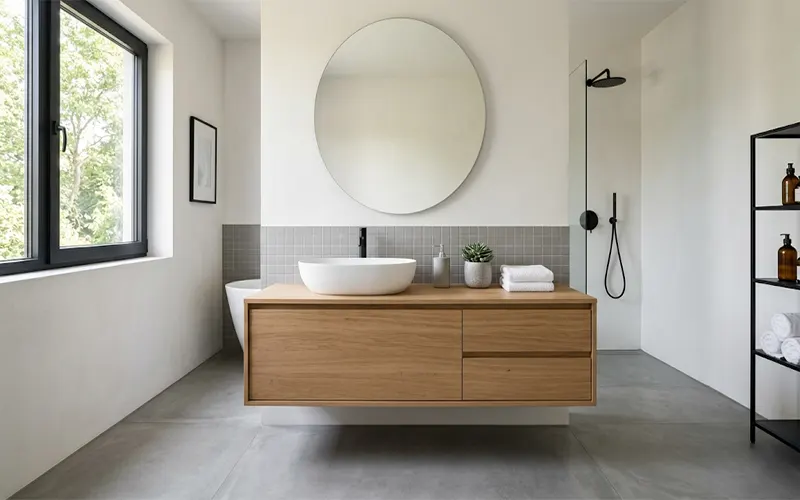
In the world of high-end interior design, minimalism is often misunderstood as an absence of things. In reality, true minimalism is the intentional curation of elements that provide maximum utility with minimum visual “noise.” In the bathroom—a space traditionally cluttered with pipes, bottles, and bulky cabinetry—the modern floating vanity has emerged as the definitive architectural solution for a clean, serene environment.
By detaching the vanity from the floor, you introduce the concept of “zero gravity” into your home. This design choice doesn’t just look modern; it fundamentally alters the physics of the room. It creates uninterrupted sightlines that extend to the baseboards, making even the most compact bathroom feel expansive and airy.
The Physics of Airy Design: Visual Weight
Traditional floor-mounted vanities act as heavy anchors, visually “closing in” a room by cutting off floor space. A floating vanity, conversely, manages “visual weight” by allowing light and air to circulate beneath the unit.
This elevation serves a psychological purpose: it transforms a utilitarian storage box into a piece of sculpture. When the floor remains visible, the brain perceives the room’s boundaries as further away, creating an immediate sense of relief and openness—a hallmark of the minimalist sanctuary.
Materiality in Minimalism: Finding Your Texture
A minimalist vanity shouldn’t be “boring.” Because there is less detail to distract the eye, the quality of the materials becomes the focal point.
1. The Warm Minimalist (Japandi Style)
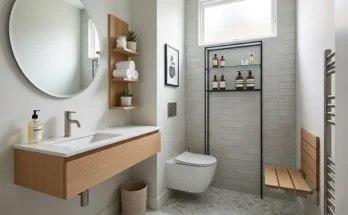
The “Japandi” aesthetic—a hybrid of Japanese Zen and Scandinavian functionality—is currently dominating the high-end market. Look for vanities crafted from rift-sawn white oak or walnut. The vertical grain patterns provide a subtle, organic texture that softens the hard surfaces of tile and stone.
2. The Monolithic Stone Block
For an ultra-modern, architectural statement, consider a monolithic floating vanity. These are often constructed from a single material—such as quartz, sintered stone, or poured concrete—where the sink basin and the cabinet body appear as one seamless, solid block. It is the ultimate expression of “less is more.”
3. High-Tech Matte Surfaces
Modern laminates and soft-touch acrylics have evolved. Anti-fingerprint matte finishes in deep charcoal, forest green, or sand provide a velvety texture that resists the visual clutter of smudges. These materials are perfect for bathrooms with high sunlight, as they absorb light rather than reflecting it, maintaining a calm atmosphere.
Handle-less Hardware: The “Push-to-Open” Aesthetic
Minimalism is a war against “visual noise,” and traditional drawer pulls are often the primary offenders. The modern floating vanity achieves its sleekness through handle-less design.
- Integrated J-Pulls: A groove is carved into the top of the drawer or door, allowing your fingers to hook in and pull without any external hardware.
- Chamfered Edges: The top edge of the drawer is cut at a 45-degree angle, creating a hidden “lip” for a seamless look.
- Electronic Push-to-Open: For the ultimate luxury experience, magnetic or electronic touch-latches allow the drawers to glide open with a simple tap of the knee or hand, keeping the vanity face perfectly flat and uninterrupted.
Lighting the Void: Enhancing the Float
The “floating” effect can be dramatically enhanced through the strategic use of light. Installing LED strip lighting along the underside of the vanity creates a soft “halo” on the floor below.
This serves two purposes:
- Architectural Drama: It emphasizes the gap between the floor and the cabinet, making the unit appear to hover in space.
- Functionality: When connected to a motion sensor, this under-cabinet glow acts as a perfect low-light nightlight, guiding guests without the harsh glare of overhead fixtures.
Pro-Tip: The Bottle Trap
When installing a floating vanity, the plumbing is often visible from underneath. To maintain a minimalist look, replace the standard white plastic “P-trap” with a polished “Bottle Trap” in a finish that matches your faucet (e.g., Brushed Nickel or Matte Black). It turns a functional necessity into a design detail.
Storage Secrets: Invisible Organization
The most common critique of floating vanities is that they sacrifice storage for style. However, modern internal engineering solves this through “hidden utility.”
- U-Shaped Drawers: Rather than losing the top drawer to the sink’s drain pipe, “U-shaped” cutouts wrap around the plumbing, reclaiming valuable real estate for small items.
- Tiered Organizers: Look for vanities with internal “drawers within drawers.” This allows you to store tall bottles in the back while keeping small daily essentials easily accessible in a sliding top tray.
- Integrated Power: High-end units now feature built-in power strips inside the drawers, allowing you to charge electric toothbrushes and store hair dryers without cords ever touching the countertop.
Sizing and Proportions
Minimalism is as much about proportion as it is about style.
- Wall-to-Wall: In a smaller bathroom, extending a floating vanity from one wall to the other creates a “horizontal line” that makes the room feel much wider.
- Centered “Island” Effect: In larger master suites, centering a floating vanity with a foot of space on either side emphasizes its status as a piece of furniture.
- The 12-Inch Rule: For the best aesthetic results, aim for at least 10 to 12 inches of clearance between the bottom of the vanity and the floor. Anything less can make the unit look “heavy” or like a mistake.
Minimalist Style Matrix
| Style | Primary Material | Hardware Style | Vibe |
| Japandi | Light Oak / Slate | Integrated J-Pull | Warm, Zen, Organic |
| Industrial | Concrete / Steel | Matte Black Bars | Raw, Urban, Edgy |
| Ultra-Modern | High-Gloss / Glass | Push-to-Open | Sleek, Futurist, Clean |
Installation & Structural Requirements
Before purchasing, ensure your bathroom walls can support the load. A floating vanity—especially one with a stone countertop—is incredibly heavy. Professional installation requires “blocking” (heavy-duty timber supports) installed behind the drywall to anchor the unit securely to the wall studs.
A Sanctuary of Simplicity
A modern floating vanity is more than a cabinet; it is a design philosophy. It represents a move away from the “clutter-core” of the past and toward a future where our homes are as efficient as they are beautiful. By elevating your vanity, you elevate the entire character of your bathroom, turning a daily routine into a ritual performed in a sanctuary of simplicity.
Whether you choose the warmth of natural wood or the cool precision of stone, the floating vanity stands as the “hero” piece of the minimalist home—an anchor of style that ironically feels as light as air.