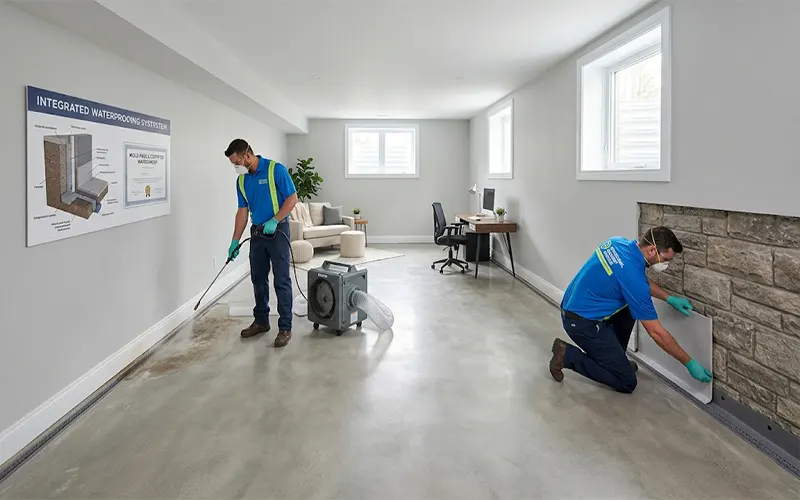
A basement is more than just the lowest level of a home; it is the foundation upon which the entire structural integrity and air quality of a property rest. However, because basements are situated below the water table, they exist in a state of constant environmental pressure. In engineering terms, this is known as hydrostatic pressure—the force exerted by groundwater against the foundation walls.
When water is allowed to win this battle, the results are twofold: the mechanical degradation of the home’s structure and the biological invasion of microbial growth. To truly protect a home, one must view waterproofing and mold remediation as a single, holistic discipline. You cannot permanently remove mold without stopping the water, and you cannot safely waterproof a space that is already contaminated with fungal spores.
The Science of Waterproofing: Exterior vs. Interior
The goal of professional waterproofing is to manage water flow and relieve the pressure building up against the concrete. In regions with heavy seasonal rainfall, such as the tropical monsoons of Malang, the soil becomes saturated quickly, creating what is known as the “clay bowl” effect around your foundation.
1. Exterior Solutions: The First Line of Defense
Exterior waterproofing is widely considered the “Gold Standard” because it stops water before it ever touches the foundation.
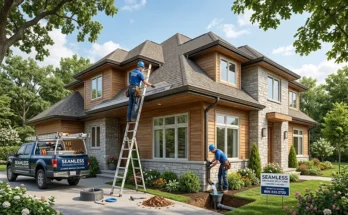
- Excavation and Membranes: The soil around the home is excavated to the footing. A thick, polymer-modified asphalt membrane is applied to the concrete, followed by a dimpled drainage board that directs water downward.
- French Drains: At the base of the footing, a perforated pipe (French drain) is installed in a bed of gravel to whisk groundwater away from the house before it can exert pressure.
2. Interior Solutions: Managing Seepage
In many cases—particularly in existing homes where exterior excavation is impossible—interior management is the most viable path.
- Internal Perimeter Drains: A trench is cut into the basement floor, and a “weeping tile” system is installed to catch water that seeps through the walls.
- Sump Pump Systems: This water is directed to a sump pit, where a high-capacity pump ejects it safely away from the home. Professional systems always include a battery backup to ensure functionality during power outages.
3. Crack Injection
For poured concrete walls, vertical cracks can often be solved via Polyurethane or Epoxy injection. This process involves injecting a liquid resin that expands to fill the entire depth of the crack, creating a flexible, watertight seal that moves with the house.
Mold Remediation: More Than Just Bleach
Once moisture enters a basement, mold can begin to colonize in as little as 24 to 48 hours. A common mistake homeowners make is attempting to “kill” mold with bleach.
The Reality: Bleach is mostly water. On porous surfaces like wood or drywall, the chlorine stays on the surface while the water soaks into the material, effectively “feeding” the mold roots (hyphae) and ensuring its return. Professional remediation follows the IICRC S520 standard:
- Containment: Using 6-mil poly-sheeting and “negative air pressure” machines with HEPA filtration to ensure spores do not travel to the rest of the house during the cleaning process.
- HEPA Vacuuming: Physically removing the “spore load” from all surfaces.
- Antimicrobial Encapsulation: Treating the remaining structural members with a specialized “sealant” that prevents future mold growth.
- Disposal: Removing “Category 3” contaminated materials (like moldy drywall or carpet) that cannot be salvaged.
The Hidden Health Risks: The “Stack Effect”
Many homeowners assume that if they don’t spend time in their basement, the mold there won’t affect them. This is a dangerous misconception caused by the Stack Effect.
As warm air rises and escapes through the attic, it creates a vacuum that pulls air upward from the lowest point of the house—the basement. Scientific studies suggest that up to 50% of the air you breathe on the first floor comes from the basement. If the basement is contaminated with Stachybotrys (Black Mold) or Aspergillus spores, those toxins are being circulated directly into the bedrooms and living areas, potentially causing respiratory issues, allergies, and “Sick Building Syndrome.”
Myth vs. Reality: Waterproofing Paint
Myth: “I can just buy a can of ‘waterproofing paint’ and seal the walls from the inside.”
Reality: These paints act as a temporary vapor barrier. Eventually, the hydrostatic pressure behind the wall will cause the paint to bubble, peel, and trap moisture against the concrete, which actually creates a perfect breeding ground for mold behind the paint film.
The Technology of Dryness
Modern remediation firms use advanced diagnostic tools to find water that the human eye cannot see:
- Thermal Imaging: Infrared cameras detect “cool spots” behind finished walls, which almost always indicate hidden moisture or a slow pipe leak.
- Moisture Mapping: Professional-grade moisture meters measure the “percentage of saturation” in wood studs and sill plates to determine if they can be dried or must be replaced.
- Industrial Dehumidification: Standard home dehumidifiers are insufficient for a flooded basement. Professionals use LGR (Low Grain Refrigerant) dehumidifiers that can pull dozens of gallons of water out of the air daily.
The Financial ROI: Protecting the Asset
A damp, moldy basement is an “Equity Killer.” In the 2026 real estate market, buyers are hyper-aware of environmental hazards.
- Remediation Cost: $3,000 – $10,000 (Average).
- Value Impact: A basement with a history of water issues can devalue a home by 10% to 20%.
- The Certificate of Dryness: Following a professional waterproofing and mold removal project, the contractor provides a transferable warranty. This document acts as a “Clean Bill of Health” that can be shown to prospective buyers, turning a potential liability into a major selling point.
A Holistic Approach
Successful basement management requires a two-pronged attack. You must treat the symptom (the mold) and fix the source (the water intrusion). By employing professional waterproofing to manage hydrostatic pressure and IICRC-standard mold remediation to ensure air quality, you protect both the structural bones of the house and the health of the people living within it. A dry basement is not just extra square footage; it is the foundation of a healthy home.