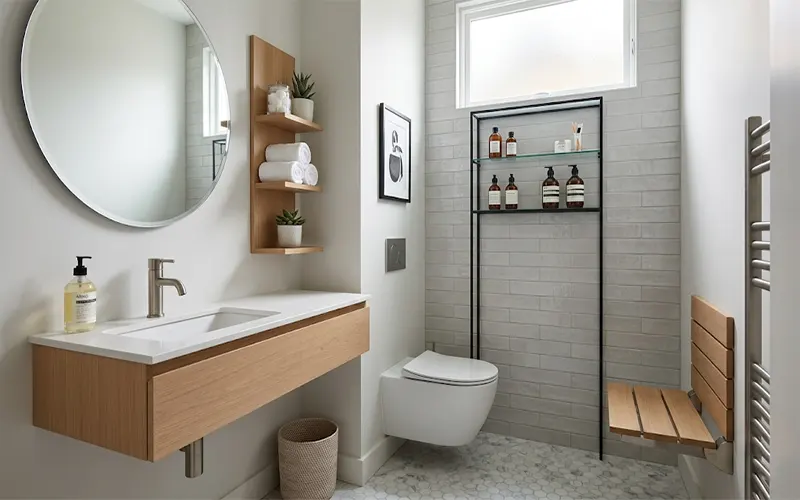
The powder room is often the smallest room in the house, yet it holds the highest “style-per-square-foot” potential. Because it is a high-traffic area for guests but lacks the steam and humidity of a full bathroom, it offers a unique opportunity to experiment with furniture, textures, and finishes that might be too delicate for a primary bath.
In a small powder room, the goal of furniture selection is twofold: to provide essential utility and to maximize “Visual Floor Space.” When the eye can trace the floor all the way to the baseboards, the brain perceives the room as larger than it actually is. By prioritizing slender profiles and “floating” elements, you can transform a cramped half-bath into a curated micro-luxury retreat.
The Floating Revolution: Wall-Mounted Vanities and Sinks
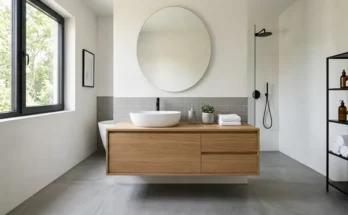
The most effective way to “cheat” the dimensions of a room is to remove the “legs” from your furniture. Wall-mounted (or floating) vanities have become the gold standard for modern powder rooms.
Integrated Basins vs. Petite Vessel Sinks
A floating vanity with an integrated basin creates a seamless, monolithic look that reduces visual clutter. However, if you are working with a truly narrow depth—say, 12 to 15 inches—a petite vessel sink might be the better choice. By sitting on top of the counter, the sink allows the cabinet below to be shallower, leaving more room for you to stand and move.
The Return of the Console Sink
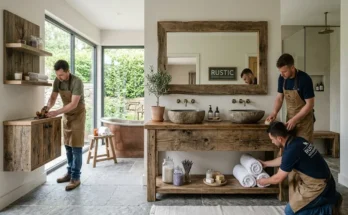
For those who prefer a vintage or “Grandmillennial” aesthetic, the console sink is a space-saving powerhouse. These units feature a ceramic or stone top supported by slender metal legs (often in unlacquered brass or matte black). Because the space beneath the sink remains open, the room maintains an airy, expansive feel while providing a horizontal bar for hanging a hand towel.
Corner Solutions: Reclaiming Dead Space
In many powder rooms, the corners are “dead zones” that offer no utility. Corner-mounted furniture turns these awkward angles into functional focal points.
- Triangular Vanities: A corner vanity utilizes the depth of the corner to provide a surprisingly large sink basin without protruding into the center of the room.
- Tiered Corner Shelving: Instead of a bulky floor cabinet, consider three tiers of floating glass or reclaimed wood shelves tucked into a corner. This provides a home for extra rolls of linen-textured toilet paper or a signature candle without occupying a single inch of floor tiles.
Beyond the Vanity: Vertical Storage & Recessed Niches
When horizontal space is non-existent, the only way to go is up—or in.
The End of the “Wire Rack”
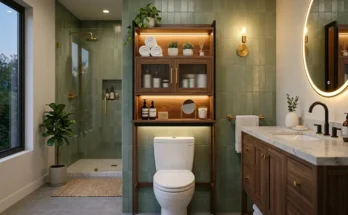
Traditional over-the-toilet wire racks often feel cluttered and cheap. To elevate the space, consider a custom-look built-in shelf that spans the width of the toilet area. By painting the shelves the same color as the walls, the furniture “disappears,” providing storage for guest towels and soaps without feeling like an intrusion.
The Recessed Niche
If you are undergoing a renovation, the best furniture idea is the one that lives inside the wall. Recessed medicine cabinets and wall cubbies utilize the 3.5-inch depth between wall studs. A high-end, mirrored medicine cabinet that sits flush with the drywall offers hidden storage for essentials while providing a reflective surface that doubles the room’s perceived depth.
Multi-Functional and Slimline Furniture
Every piece of furniture in a small powder room must earn its keep. If a piece doesn’t serve at least two purposes, it may be a candidate for removal.
- The 6-Inch Slide-Out: There is often a narrow gap between the toilet and the vanity. Slimline “slide-out” cabinets—essentially a tall, narrow drawer on casters—can hold up to a dozen rolls of toilet paper and cleaning supplies in a space that would otherwise be wasted.
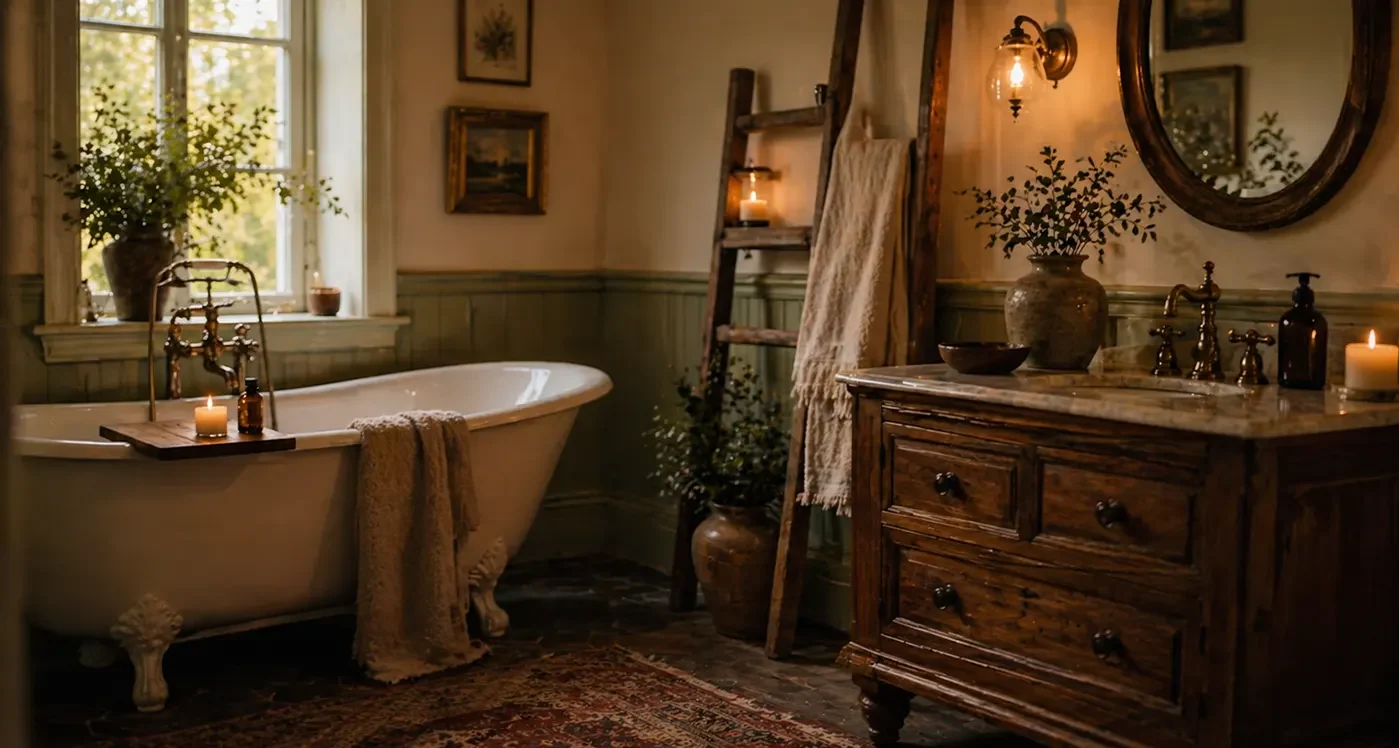
- Leaning Ladder Racks: A slender wooden ladder leaning against the wall provides a stylish place to hang multiple decorative towels. Its footprint is minimal (only about two inches of floor depth), but it adds significant vertical texture.
- Tuck-Away Stools: A small, ceramic garden stool or a minimalist acrylic bench can sit under a floating vanity. It serves as a surface for a guest’s handbag or a stack of fresh towels but can be pushed completely out of the way when not in use.
Materials Matter Sidebar
- Glass & Acrylic: Choose “ghost” furniture or glass shelving to provide utility without adding visual weight.
- Light-Reflective Metals: Polished chrome or nickel finishes act like tiny mirrors, bouncing light around the room.
- Light Woods: White oak or ash wood provides warmth without the “closing-in” effect of dark mahogany or espresso finishes.
Mirror Magic and Lighting Placement
While technically “decor,” mirrors and lighting function as furniture in a small space. An oversized, wall-to-wall mirror is the oldest trick in the book for a reason—it effectively doubles the square footage of the room.
To save space on the walls, opt for a backlit LED mirror. This eliminates the need for bulky side-sconces or overhead “vanity bars,” allowing the walls to remain clean and uncluttered. If you must use sconces, choose “slender-arm” designs that keep the light source close to the mirror.
The “Minimalist Edit”: Proportion and Balance
The most common mistake in a powder room is trying to fit too many small pieces of furniture. This creates a “dollhouse” effect that feels chaotic. Instead, choose one “Hero” piece—perhaps a stunning floating stone vanity—and keep everything else strictly minimalist.
Proportion Cheat Sheet
To ensure your furniture fits perfectly, keep these measurements in mind:
- Vanity Depth: Aim for 16–18 inches (standard is 21 inches).
- Clearance: Ensure there is at least 21 inches of clear space in front of the toilet and sink.
- Sconce Height: Mount wall lights 60–66 inches from the floor to keep the eye level at the most flattering point.
- Towel Bar Placement: 48 inches from the floor is standard, but in a small space, consider mounting it on the side of the vanity to save wall space.
Small Space, Big Statement
Designing a powder room is an exercise in editing. By choosing furniture that floats, utilizes corners, or hides within the walls, you can create a space that feels intentional rather than cramped. Remember: in a small room, quality always trumps quantity. A single, beautifully crafted floating vanity in white oak or a slender brass console sink makes a far more powerful statement than a room full of small storage hacks. Focus on the floor, look to the walls, and let your furniture breathe.