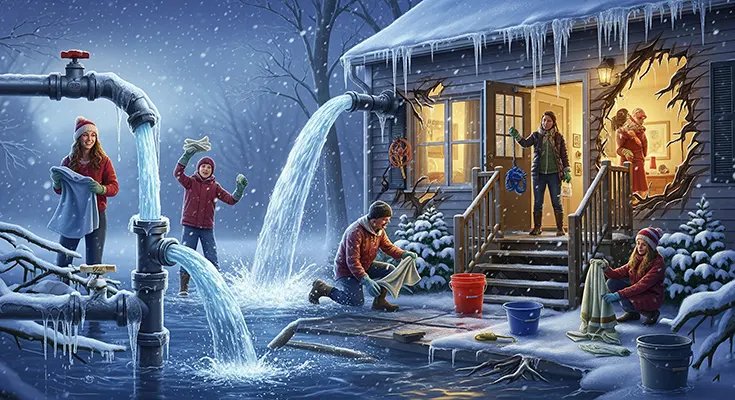
As the winter months bring freezing temperatures, homeowners face the risk of burst pipes, which can lead to water damage and costly repairs. Knowing how to handle this emergency situation is crucial to minimize the impact on your home. In this article, we’ll provide essential tips for addressing burst pipes during winter and mitigating the potential damage.
1. Shut Off the Water Supply
In the event of a burst pipe, the first step is to locate the main water shut-off valve in your home and turn off the water supply. This action helps prevent additional water from flooding the affected area and minimizes the extent of water damage.
2. Drain Faucets and Open Taps
After shutting off the water supply, open all faucets in the affected area to allow any remaining water to drain out. This helps alleviate pressure within the pipes and reduces the risk of further damage.
3. Locate the Burst Pipe
Once the water supply is turned off, identify the location of the burst pipe. Look for signs of water leakage, including dampness, pooling water, or water stains on walls, ceilings, or floors. It’s crucial to pinpoint the exact location of the burst to effectively address the issue.
4. Apply Temporary Repairs
If the burst pipe is accessible and the damage is minor, you can attempt a temporary repair using pipe repair tape, pipe clamps, or a rubber patch kit. These temporary solutions can help minimize water leakage and buy you time until a professional plumber can make a permanent repair.
5. Thaw Frozen Pipes
In some cases, burst pipes occur due to frozen water within the pipes. If you suspect frozen pipes, apply gentle heat to the affected area using a hairdryer, heating pad, or space heater. Never use an open flame or high-heat devices, as they can pose fire hazards.
6. Contact a Licensed Plumber
While temporary repairs can provide immediate relief, it’s essential to contact a licensed plumber promptly to assess the extent of the damage and perform permanent repairs. A professional plumber will have the expertise and tools to address the burst pipe and restore your home’s plumbing system safely and effectively.
7. Take Preventative Measures
After addressing the burst pipe, take preventative measures to safeguard your home against future incidents. Insulate exposed pipes, especially in unheated areas, and consider installing pipe insulation to prevent freezing. Additionally, allow a slow drip from faucets during extremely cold weather to keep water flowing and reduce the risk of frozen pipes.
8. Document the Damage
Keep in mind that burst pipes and subsequent water damage may be covered by your homeowner’s insurance. Take photographs of the damage and keep detailed records of the repair process for insurance purposes. Contact your insurance provider to understand the coverage and file a claim if necessary.
By following these emergency home repair tips for burst pipes during winter, you can effectively manage the situation and protect your home from extensive water damage. Prioritize safety, act promptly, and seek professional assistance to address burst pipes and safeguard your home’s plumbing system.