In the world of landscape architecture, the traditional vertical picket fence—long a symbol of suburban nostalgia—is being replaced by a sleeker, more sophisticated successor: the Horizontal Slat Fence. This shift represents a broader “Horizontal Revolution” in exterior design, where rectilinear lines are used to mimic the interior flow of modern open-concept homes.
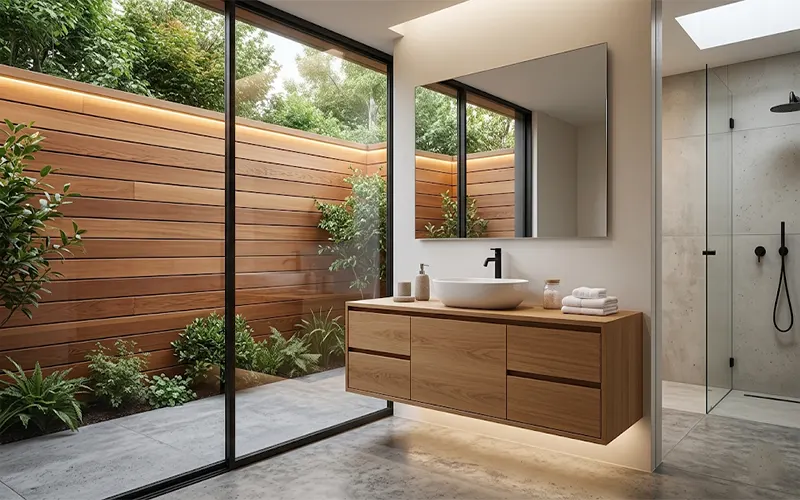
A horizontal fence does more than just define a boundary; it performs a visual trick on the landscape. By drawing the eye along the horizon rather than up toward the sky, horizontal slats “stretch” a backyard, making small urban spaces feel wider and more expansive. When executed in Western Red Cedar, this design becomes a masterclass in texture, warmth, and architectural precision.
Why Cedar? The Gold Standard for Modern Fencing
While pressure-treated pine is common for budget builds, it lacks the stability and grace required for a contemporary horizontal design. Cedar is the undisputed gold standard for three reasons:
- Natural Longevity: Cedar is saturated with natural tannins and oils that act as a built-in preservative, resisting rot, decay, and insect infestation without the need for harsh chemicals.
- Dimensional Stability: Horizontal fences are prone to “bowing” and “cupping.” Cedar has a low shrinkage factor, meaning it stays straight and true far better than most other softwoods.
- The Aesthetic Journey: Cedar offers a “warm honey” glow when first installed. Over time, if left untreated, it transitions into a sophisticated “weathered silver-gray” that complements modern concrete and steel elements beautifully.
Cedar Grade Comparison Table
| Grade | Visual Profile | Best Use | Cost |
| Clear / Architect Clear | No knots; consistent vertical grain. | Ultra-modern, minimalist high-end builds. | |
| Select Tight Knot (STK) | Small, sound knots; rustic but refined. | Contemporary homes with organic textures. | $$ |
| Custom Knotty | Larger, more frequent knots. | Large perimeter fences where cost is a factor. | $ |
Design Profiles: Choosing Your Slat Style
The “Contemporary” look is not one-size-fits-all. The spacing of your slats defines the mood of your outdoor room.
- The Zero-Gap Privacy Wall: Boards are stacked tightly. This creates a monolithic, architectural “wall” that offers 100% seclusion. It is ideal for shielding a hot tub or a meditation corner.
- The Spaced Slat (Shadowbox): Using 1/4-inch or 1/2-inch spacers between boards allows for airflow and creates “shadow lines” that add depth to the fence. This is particularly effective in high-wind areas or tropical climates like Malang, where ventilation prevents mold growth on the wood.
- The Mixed-Width Pattern: For a truly custom look, designers often “rhythmically” alternate board sizes—for example, two 1×4 boards followed by one 1×6 and a 1×2. This creates a textured, “barcode” effect that is a hallmark of high-end Pacific Northwest design.
The Engineering of the Horizontal Build
The biggest mistake DIYers make is treating a horizontal fence like a vertical one. Gravity is the enemy of the horizontal slat.
1. Post Spacing
In a vertical fence, 8-foot post centers are the norm. In a horizontal fence, 6-foot centers are mandatory. The weight of the long slats over time will cause “mid-span sag” if the posts are too far apart.
2. The “Center-Stint” (Anti-Sag Board)
To further prevent warping, professional builders install a “Center-Stint”—a vertical 2×2 or 1×4 board screwed into the backside of the fence slats in the middle of each 6-foot bay. This ties the slats together, forcing them to act as a single rigid panel.
3. Fastener Selection
Never use galvanized nails. The natural acids in cedar react with zinc, causing ugly black streaks (tannin bleed) down your boards. Use 304 or 316-grade stainless steel screws. They are more expensive but are the only way to keep a cedar fence looking pristine.
Step-by-Step Installation Highlights
- Setting the Foundation: Posts must be set in at least 24-36 inches of concrete. They must be perfectly “plumb” (vertical); a 1-degree tilt in a post will be painfully obvious when you try to run long, straight horizontal lines across it.
- Starting at the Bottom (with a gap): Start your first board 2 inches off the ground to prevent moisture wicking from the soil. Use a pressure-treated “kickboard” if you want a zero-gap look at the bottom.
- Leveling Every Third Board: Do not trust the board below to be level. Wood has slight variations. Check your progress with a 4-foot level every three boards to ensure your lines don’t “creep” or slant over a long run.
Pro-Tip: The Expansion Gap
Wood is a living material. In humid environments like Malang, cedar will expand. When installing slats, always leave a 1/8-inch “expansion gap” where the boards meet the posts. If you butt them tight, the boards will buckle and “cup” as they swell in the rain.
Finishing and Preservation
To stain or not to stain?
- Maintenance of Color: To keep the “new wood” look, apply a high-quality UV-inhibiting oil-based stain. In high-humidity areas, look for stains with added mildewcides.
- The Silver Patina: If you prefer the weathered look, you still need to protect the wood. Apply a clear “wood sealer” that allows the wood to gray naturally while preventing water from saturating the fibers.
- End-Grain Sealing: The ends of the boards are the most vulnerable. Apply a wax-based sealer to every cut end during installation to prevent “checking” or splitting.
The Financial and Aesthetic ROI
A horizontal cedar fence is an investment in “Curb Appeal.” While a standard fence is a utility, a contemporary horizontal build is an architectural feature. Real estate data consistently shows that high-end exterior carpentry increases home valuation and decreases “time on market” by signaling to buyers that the property is modern and well-maintained.
By creating a “living outdoor room,” you effectively increase the usable square footage of your home. It provides a warm, organic backdrop for fire pits, outdoor kitchens, and modern landscaping, turning a simple backyard into a sophisticated sanctuary.
A Framework for Privacy
Contemporary horizontal cedar fencing is the perfect marriage of form and function. It provides the privacy we crave while maintaining the aesthetic standards of modern architecture. By paying close attention to engineering—specifically post spacing, fastener quality, and moisture management—you can create a boundary that is as durable as it is beautiful. Whether you are aiming for a minimalist zero-gap wall or a rhythmic mixed-width pattern, a horizontal cedar fence is the ultimate framework for a modern outdoor life.