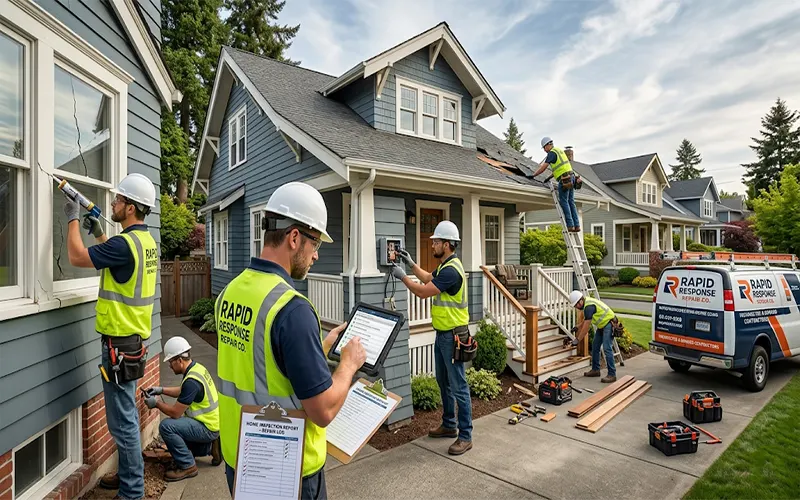
In the high-velocity world of real estate, the period between an “Accepted Offer” and “Closing” is often the most precarious. For many, the “Home Inspection” is the ultimate hurdle. When an inspection report comes back with thirty pages of red-inked deficiencies, the clock starts ticking. In many jurisdictions, the “Option Period” or “Inspection Contingency” lasts only 7 to 10 days.
In this narrow window, time is literally money. If repairs aren’t addressed—or at least bid on—before the contingency expires, the buyer may walk away, or the deal may collapse under the weight of heavy price concessions. This is where Rapid Response Real Estate Contractors become the unsung heroes of the transaction. Unlike traditional remodelers who schedule weeks in advance, these specialized teams are built for the “escrow sprint,” providing the speed, documentation, and technical expertise required to save the deal.
The “Big Five” Inspection Deal-Killers
While an inspection report may list dozens of minor items (like a loose doorknob or a cracked outlet cover), there are five major categories that typically trigger a buyer’s “fight or flight” response. Rapid response contractors prioritize these “Big Five” to ensure the mortgage lender remains comfortable with the collateral.
- Roofing and Flashing: Missing shingles or improper “step flashing” around chimneys.
- Electrical Hazards: Specifically the lack of GFCI (Ground Fault Circuit Interrupter) protection in wet areas or outdated electrical panels (e.g., Federal Pacific or Zinsco).
- Plumbing and Sewer: Active leaks under sinks or “slow drains” that suggest a deeper main-line issue.
- HVAC Performance: A furnace or A/C unit that isn’t producing the required “temperature differential.”
- Structural/Foundation: Cracks in the foundation or evidence of past water intrusion in a basement.
A general handyman may be able to fix a leaky faucet, but for the “Big Five,” you need a contractor with licensed tradespeople who can provide the “Professional Opinion” letters that buyers and lenders demand.
The Rapid Response Workflow: From Report to Repair
The hallmark of an escrow-specialist contractor is their ability to work directly from the Home Inspection Report.
The “Blind Bid” Strategy
Standard contractors often require an on-site visit just to provide an estimate. Rapid response teams are trained to read the inspector’s language and look at the attached photos to provide a “Blind Bid” or a “Ballpark Estimate” within hours. This allows the seller to negotiate with the buyer in real-time, rather than waiting for a site visit that might not happen until the contingency has already expired.
Prioritizing the “Health & Safety” List
A specialized contractor will help the seller (and their agent) categorize the repairs. They focus on the “Safety and Code” issues first—the items that a buyer’s inspector will look for during the re-inspection. By focusing the budget on these critical items, the seller avoids wasting money on cosmetic fixes that won’t move the needle on the sale.
Documentation: The Key to a Smooth Closing
In a real estate transaction, “if it isn’t documented, it didn’t happen.” A rapid response contractor understands that their “product” isn’t just the repair; it is the Paper Trail.
A simple handwritten receipt for “fixed sink” will rarely satisfy a buyer’s attorney or a lender’s underwriter. These contractors provide:
- Itemized Invoices: Clearly stating which item from the inspection report was addressed.
- Photos of Completion: “Before and After” shots that prove the work was done to code.
- Paid-in-Full Receipts: Crucial for the Title Company to ensure no mechanic’s liens are placed on the property.
- Warranty Transfers: Documentation showing that the repair is warrantied, which builds massive buyer confidence.
The Logistics of Speed: How They Move So Fast
How does a rapid response team finish in three days what takes a standard GC three weeks?
- Dedicated “Escrow Crews”: These firms keep small, mobile teams specifically for short-term, multi-trade repairs.
- Permit Expediting: They often have long-standing relationships with municipal building departments, allowing them to pull “Emergency Repair” permits faster than the general public.
- Material Readiness: They stock common inspection “fix-it” items—GFCI outlets, specific flashing types, and standard HVAC components—so they don’t have to wait for supply chain orders.
Cost vs. Concessions: The Financial Strategy
When a seller receives a $5,000 repair request, they have two choices: give the buyer a $5,000 credit at closing or hire a contractor to fix it.
Statistically, doing the work is often cheaper. A buyer’s “Repair Credit” request is usually inflated to account for the “hassle factor.” For example, a buyer might ask for $1,000 to fix a few roof shingles. A rapid response contractor might do the work for $450. By performing the repair, the seller saves $550 and removes the “uncertainty” that could lead to further negotiations later.
Inspection Response Timeline: The 7-Day Sprint
- Day 1: Receive Inspection Report; Send to Contractor.
- Day 2: Receive Itemized Bid from Contractor; Submit Response to Buyer.
- Day 3: Negotiations Finalized; Contractor Scheduled.
- Day 4-5: Repairs Performed; “Before and After” Photos Taken.
- Day 6: Final Invoice and Lien Waiver Delivered to Title Company.
- Day 7: Buyer’s Re-Inspection; “Clear to Close” achieved.
Vetting Under Pressure: Choosing the Right Team
When you are in a rush, it is easy to hire the first person who answers the phone. However, real estate agents should keep a “Preferred Vendor List” of contractors who meet these criteria:
- Multi-Trade Capability: Can they handle electrical, plumbing, AND roofing? (Using one company saves on “trip charges”).
- Responsiveness: Do they return calls within 2 hours?
- Real Estate Literacy: Do they know what an “Option Period” is? Do they understand how to talk to a home inspector?
- Insurance: Are they fully bonded and insured? (Essential to protect the seller during the transition of ownership).
Turning a Crisis into a Closing
The discovery of defects during an inspection is a moment of crisis for any seller. It introduces doubt, stress, and financial tension. A rapid response contractor acts as a “deal-saver” by injecting certainty back into the process. By moving quickly, documenting thoroughly, and focusing on the items that matter most to lenders and inspectors, they transform a daunting inspection report into a successful closing.
In a market like Malang, where property values are rising and buyers are increasingly sophisticated, having a “Rapid Response” partner on speed-dial is no longer a luxury—it is a fundamental part of a successful real estate exit strategy.